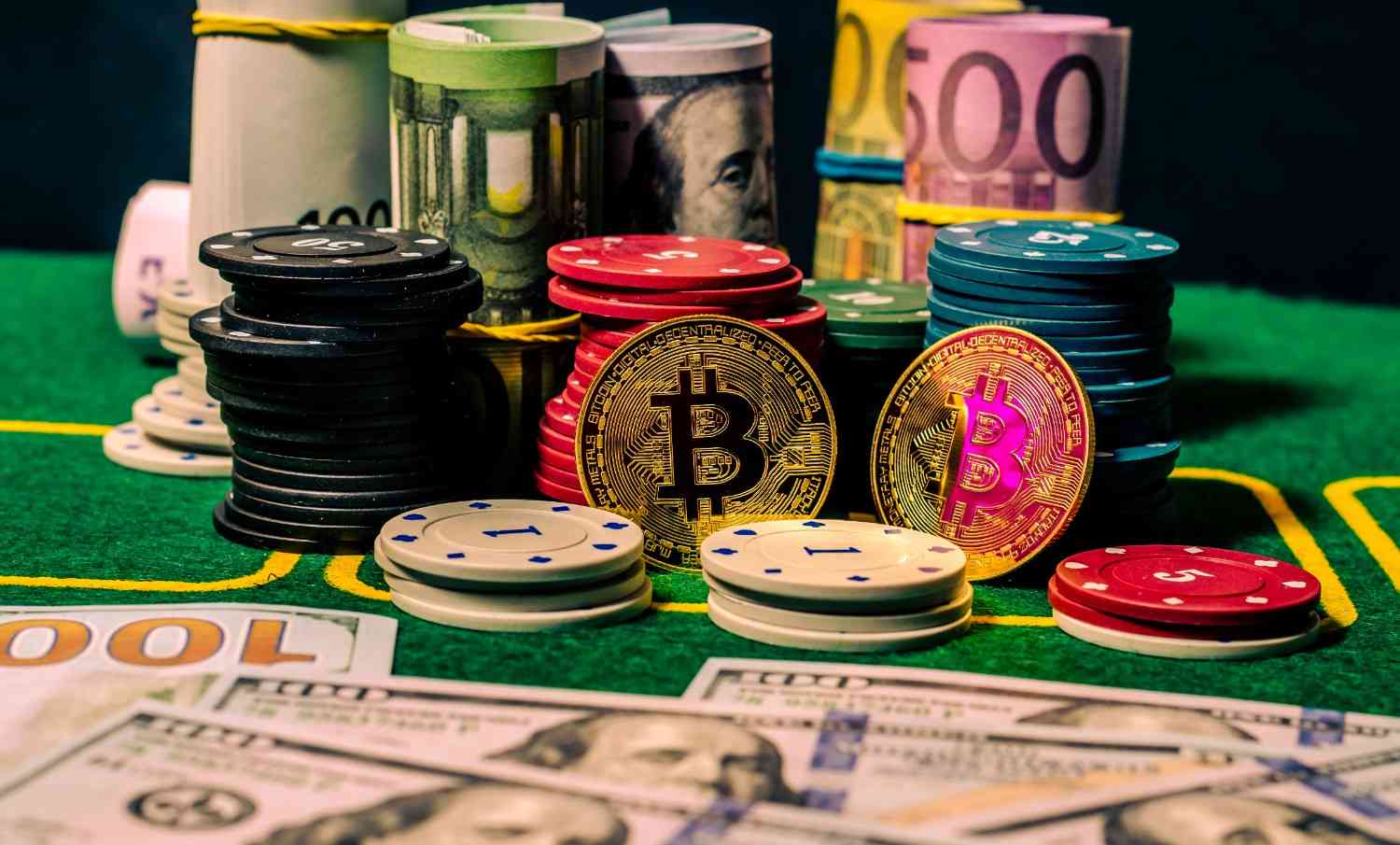
Crypto gets compared to gambling for one simple reason: many people treat it that way.
They chase price spikes, overleverage, ignore fundamentals, and hope luck does the rest. That is gambling. But it doesn't mean crypto itself is gambling.
Related reading: If you want more context, also read what tokenomics means and how to read a crypto whitepaper.
The real question isn't what crypto is. It's how you're using it.
Let's break this down clearly — and then talk about how to reduce risk without pretending crypto is risk-free.
Why Crypto Feels Like Gambling
Three features make crypto look like a casino:
1. Extreme Volatility
Bitcoin, Ethereum, and most altcoins can move 10–30% in days. Academic research consistently shows crypto is more volatile than equities, commodities, or bonds.
Volatility alone doesn't equal gambling — but unmanaged volatility does.
2. Asymmetric Information
Retail investors often buy without understanding:
- Token supply mechanics
- Emission schedules
- Governance rules
- Developer incentives
When decisions are made blindly, outcomes rely more on luck than skill.
3. Leverage and Derivatives
High-leverage trading (10x, 50x, even 100x) dominates crypto derivatives markets. Regulators and exchanges themselves acknowledge this is where most retail losses happen.
At that point, the comparison to gambling is fair.
Where Crypto Is Not Gambling
Crypto stops being gambling when expected outcomes are shaped by structure, not chance.
Examples:
- Long-term holding of Bitcoin as a scarce digital asset
- Investing in networks with real usage, revenue, or security budgets
- Position sizing based on downside tolerance, not upside fantasy
- Avoiding leverage entirely
Traditional markets accept risk as normal. Crypto just compresses that risk into shorter timeframes.
Original Framework: The SKILL vs LUCK Test
Before any crypto investment, ask:
- S — Supply clarity: Do you understand how new tokens enter circulation?
- K — Known use case: Is the network actually used today?
- I — Incentives aligned: Do developers, validators, and users benefit long-term?
- L — Liquidity depth: Can you exit without crashing the price?
- L — Loss plan: Do you know what you'll do if price drops 40%?
If you can't answer at least four confidently, you're relying on luck — not strategy.
How to Reduce Crypto Investment Risk (Practically)
1. Position Sizing Beats Predictions
Never allocate based on "conviction alone."
A common risk-managed approach:
- 1–5% of portfolio per high-risk asset
- Larger exposure only to assets with long track records (e.g., BTC, ETH)
This doesn't remove risk — it contains it.
2. Time Is a Risk Filter
Data from multiple market cycles shows that holding quality crypto assets longer reduces downside risk, especially compared to frequent trading.
This doesn't apply to every token — but it does to established networks.
3. Diversify by Risk Type, Not Token Count
Owning 20 altcoins isn't diversification if all depend on the same narrative.
Better diversification mixes:
- Base layer assets
- Infrastructure protocols
- Stablecoins or cash equivalents
4. Avoid Leverage Entirely (If You're Retail)
Most academic and exchange-published data shows retail traders lose money using leverage — consistently.
If your plan needs leverage to work, the risk profile is closer to gambling than investing.
5. Separate Research From Noise
Price charts aren't research. Social media isn't due diligence.
Actual research includes:
- Whitepapers
- Tokenomics documents
- Developer activity
- On-chain metrics
Common Mistakes That Turn Investing Into Gambling
- Buying because "everyone is talking about it"
- Averaging down without reassessing fundamentals
- Holding tokens you don't understand
- Confusing short-term price action with long-term value
- Ignoring custody and security risks
These behaviors — not crypto — create gambling outcomes.
Quick-Start Risk Reduction Checklist
- Allocate capital you can afford to lose
- Limit position sizes
- Avoid leverage
- Understand token supply mechanics
- Plan exits before entering
FAQ
Is crypto more risky than stocks?
Yes, in terms of volatility. Not necessarily in long-term return potential.
Is Bitcoin gambling?
Bitcoin speculation can be gambling. Long-term, thesis-driven allocation is closer to high-risk investing.
Can you reduce crypto risk to zero?
No. Risk can be managed, not eliminated.
Are altcoins riskier than Bitcoin?
Generally, yes — due to lower liquidity, weaker security, and shorter histories.
Is day trading crypto gambling?
For most retail participants, yes. Evidence consistently shows negative expected outcomes.
Conclusion: Crypto Isn't Gambling — Behavior Is
Crypto investing sits on a spectrum.
On one end: structured allocation, long time horizons, controlled risk. On the other: leverage, hype, short-term bets, emotional decisions.
Both use the same assets. Only one resembles gambling.
Next step: Audit your current portfolio using the SKILL vs LUCK test. Remove positions you can't justify without price charts.
That alone reduces risk more than any prediction ever will.